
Books
-
A Model Context Protocol (MCP) server for the Internet Archive’s Open Library API that enables AI assistants to search for book and author information. - 8enSmith/mcp-open-library
-
30 Days of Time
I’m a big audiobook guy. Ear reading instead of sight reading, as I like to call it. Lately I’ve been ear reading The Order of Time by Carlo Rovelli, and it has wrecked me in the best possible way.
Rovelli’s argument, roughly, is that a uniform, universal flow of time does not exist at the fundamental level. The features we associate with time, a direction, a presentness, a duration, are tied to our perspective and to thermodynamics. We don’t fully understand the microstate of the universe and his argument is that the flow of time isn’t even there to be known. That’s a hell of a thing to think about when sitting in traffic between two city buses on your way to picking up fried chicken for dinner.
So I got curious. Not just about the physics, but about all the neighboring topics. Calendars. Daylight Saving Time. Leap seconds. The fact that GPS satellites have to correct for relativity or your maps app stops working. The fact that Mars uses its own day. The fact that we voted in 2022 to abolish the leap second by 2035, and most people did not notice.
I’ve decided to spend the next 30 days writing about it. One post a day. Welcome along.
The shape of the series
I don’t want to spoil the destination, so I’ll just sketch the journey. The series breaks into four rough movements, one per week.
Week 1 — What time is. The philosophy is older than the physics. Does time flow, or is it a frozen 4D block we move through? Why does your brain experience “now” the way it does? Do other animals even live in the same time you do? This is the squishy, weird, fun stuff. No equations, lots of questions.
Week 2 — How we measure it. Sundials to cesium to optical lattice clocks. The second is a defined unit now, and that decision had consequences. We’ll talk about why your phone’s clock is more accurate than any clock that existed when your grandparents were born, and what that accuracy is for.
Week 3 — How computers handle it. Unix time, NTP, ISO 8601, time zones, DST. The infrastructure quietly holding the digital world together, and the bugs that fall out of it twice a year. If you’ve ever shipped code that broke at 2 a.m. on the second Sunday of March, this week is for you.
Week 4 — Where it breaks. Leap seconds, calendar reform, DST politics, the slow drift between atomic and astronomical time. The current system is more held-together-with-tape than most people realize. By the end of the week I want us both asking the same question.
I’m not going to tell you what that question is yet. Part of the fun is getting there together.
What this is, and what it isn’t
This isn’t a textbook. It isn’t a research project or a reading log either. It’s a series of posts on a topic I’m interested in.
I’m not a physicist, so I’ll do my best to make sure the posts aren’t wrong. If you spot a correction, replying on Mastodon is the best way to let me know.
Why 30 days? Why not? I may do more later if a particular topic wants more room. But 30 days on a single subject is probably enough for most people who show up here for programming posts. Instead, you’re getting a 30-day divergence into physics, astrophysics, and a little philosophy. Week 3 covers computer time, so there’ll be some programming in there. Just not a lot of it for a month.
My research notes live in an Obsidian vault. I’m keeping them private for now, but I may share more by the time the series wraps.
How to follow along
New post every day for 30 days, starting now.
RSS is the easiest if you want every post as it lands. Email is a weekly digest, good if you’d rather catch up on Sundays than see every post the moment it drops. Mastodon is where each post lands on social, and any replies there show up back on the blog as comments: @[email protected].
Pick whichever annoys you least.
-
Discover Children’s Books by Age, Grade, Series, and Reading Level
Discover children’s books with family and peers. Browse by age, grade, series, and reading level, then search your library and follow each child’s reading journey.
-
The Greatest Archmage To Have Ever Lived [OP MC, LitRPG]
Sael the Great was part of the legendary Heroes’ Party that defeated the Corrupted One and brought about the longest era of peace the world has ever known. He stood at the forefront of humanity’s greatest (…)
-
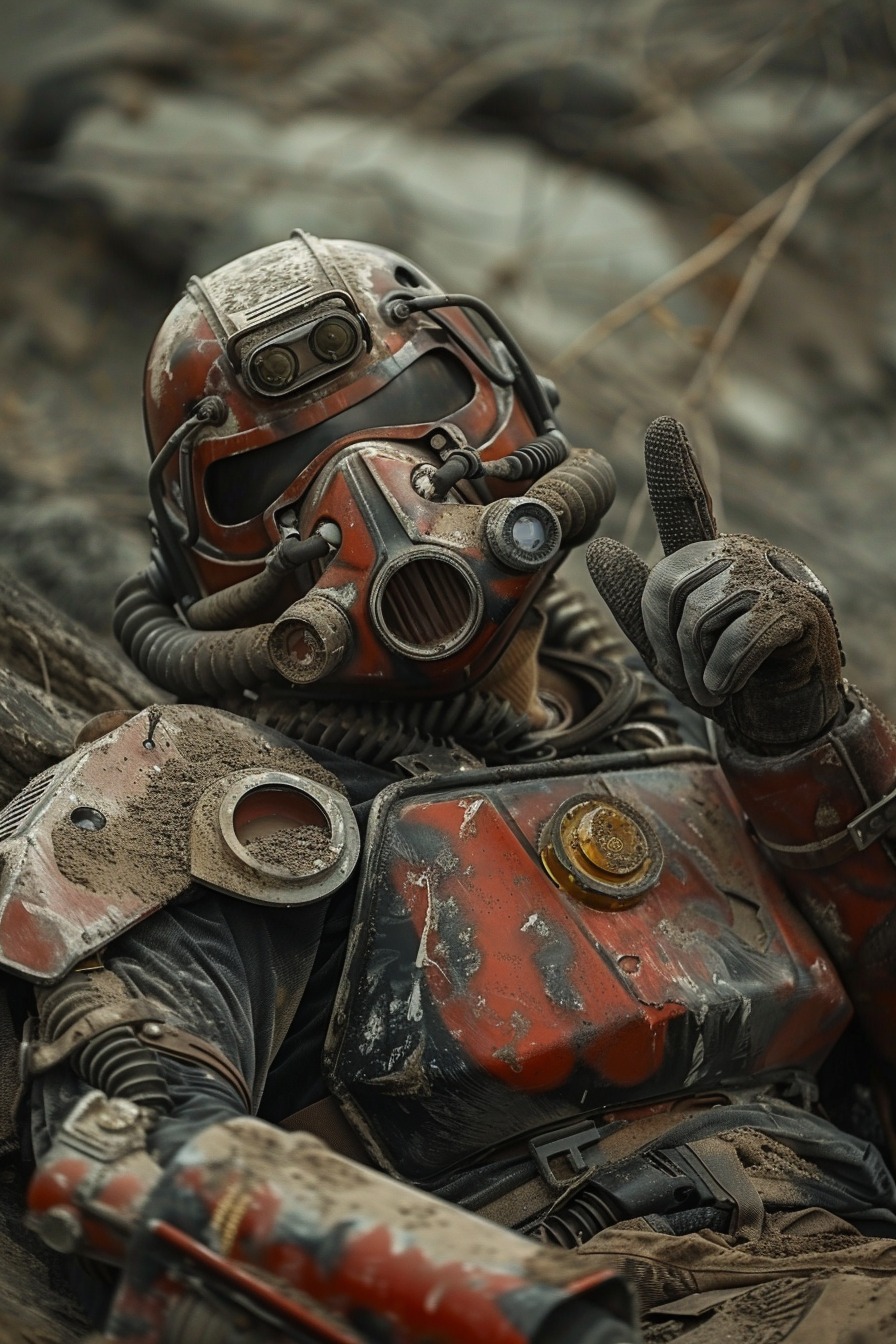
Book Recommendations for Fans of the Fallout Series
If you like the Fallout series here are some book recommendations.
- ”A Canticle for Leibowitz" by Walter M. Miller Jr. - Set in a post-apocalyptic world, this novel follows a Catholic monastery’s efforts to preserve knowledge after a nuclear war.
- “The Road” by Cormac McCarthy - This Pulitzer Prize-winning novel tells the story of a father and son’s journey through a post-apocalyptic America.
- “Swan Song” by Robert R. McCammon—This novel follows various survivors in post-nuclear war America, including a young girl with mysterious abilities.
- “Wool” by Hugh Howey - This dystopian novel is set in a future where the remnants of humanity live in underground silos following an apocalyptic event.
- “The Postman” by David Brin—In a post-apocalyptic America, a man takes on the role of a postal worker and helps rebuild civilization. The novel was also adapted into a film starring Kevin Costner.
- “Wastelands: Stories of the Apocalypse,” edited by John Joseph Adams, is an anthology of post-apocalyptic short stories by various authors.
- “The Chrysalids” by John Wyndham - Set in a post-nuclear world, this novel explores mutation, intolerance, and survival themes.
-
Got my Bookshelf fairly updated and consolidated. Think the want to read is still missing quite a bit.

-

Man what a great book - Finished reading: Elantris by Brandon Sanderson 📚
-

Listened to this on Audible - Finished reading: Trollslayer by William King 📚