
Poetry
-
Hiding Poems Inside Images
I built a tool that hides poems inside images. Not as metadata, not as a watermark. The actual text of the poem drives the visual pattern, and you can reconstruct the poem perfectly from the image alone.
How It Works
You give it a poem. It analyzes the syllable count, rhyme scheme, and stress patterns. Then it generates a visual pattern where those poetic features drive the aesthetics: spiral width, dot placement, block size, line weight.
The text itself is encoded into the pattern in a variety of ways. The pattern isn’t just inspired by the poem, it IS the poem. Run the decoder on the image and you get back the original text, character for character, including whitespace and punctuation.
Seven Renderers, Two Approaches
There are seven different visual styles, split into two categories.
The steganographic renderers (geometric, concentric, waveform) hide text invisibly in pixel color channels using LSB encoding. The visual pattern is purely decorative. This is a well-known technique. nothing new there.
I wanted to build something different, so I focused on visual encoding patterns. The encoding is the art, and the art is the encoding. Everything about how the image is constructed follows repeatable algorithms so it can be decoded back:
- Nautilus draws a golden spiral where line width carries the data
- Fibonacci uses a sunflower phyllotaxis dot pattern
- Mosaic creates an adaptive block grid
- Dotline connects dots with varying line weight
Each has different capacity. The nautilus spiral can hold about 2,200 characters, enough for a full Whitman poem. A fibonacci pattern holds about 1,600. Even the smallest renderer handles a haiku easily.
Right now I’m just having fun building different visuals, images that encode and decode. Eventually I might build an API around it, but for now it’s a side project…
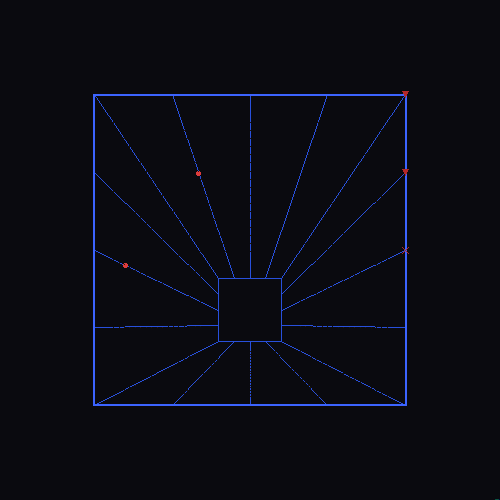
A Basho’s haiku is here:
/ Art / Programming / Poetry / Side-projects